Back to our news
SHARE
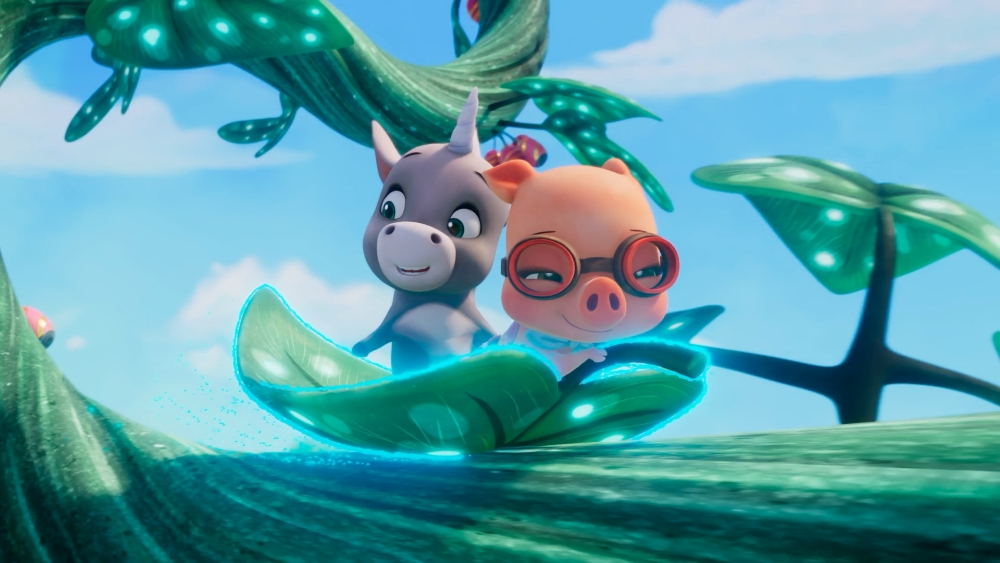
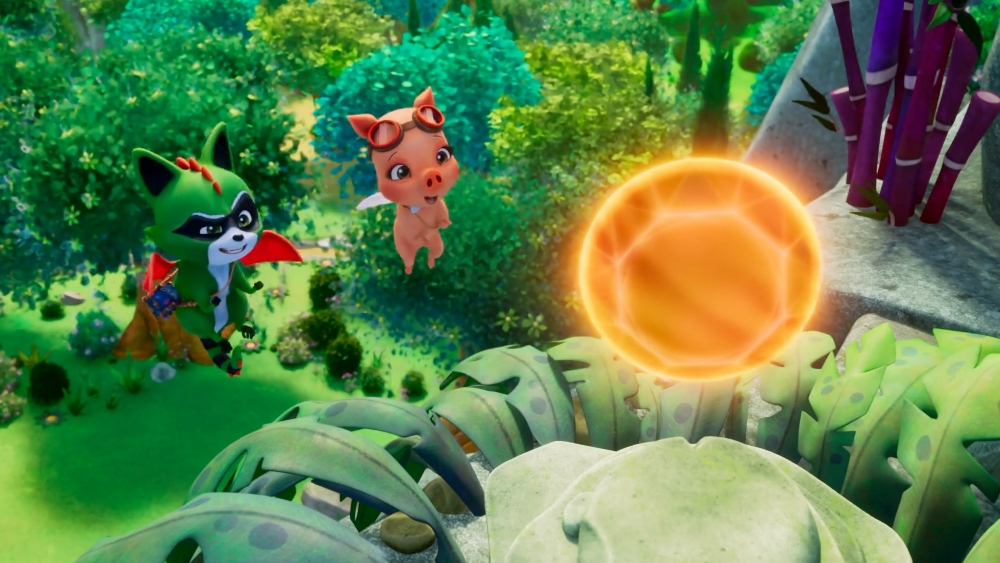
What does the world need today? An animated show about mythical mashup animals — you know, half-pig, half-Pegasus or half-donkey, half-unicorn — set on a magical island. That’s the basic premise for Disney’s addictive new toon Magicampers, which follows the adventures of Darly and Loomis (the aforementioned creatures) as they learn how to master their magical powers and work together with their eclectic friends.
Produced by OuiDo! Productions (formerly Mikros Animation IP) for Disney Jr., Magicampers is the brainchild of Obie Scott Wade (SheZow, Julius & Friends, Baby Looney Tunes), a children’s TV veteran who began his career working on Mister Rogers’ Neighborhood and Where in the World Is Carmen Sandiego?
Some Pig!
“I grew up on a farm where I was fascinated by the magic of nature,” Wade tells Animation Magazine. “We had many animals there, but a certain pig was my favorite. She had a marking on her right side that resembled a wing, and I imagined she could fly. The rest of the characters came together over time, and I imagined them all living on an enchanted island with a benevolent talking tree.”
Wade says creating an animated series with Disney has been a lifelong dream come true. “As a kid I never missed an episode of The Wonderful World of Disney. I hung on to Walt’s every word and wished that someday I too could create my own cartoons. With a lot of hard work and many wishes on stars and birthday candles, topped off with help from friends, I am living that dream.”
He says he loves the show’s captivating colors and visuals. “The character silhouettes are huggable — Loomis’ body shape is modeled after my dog, Mr. Hammon — and the look of the world is mythologically whimsical,” he adds. “Darly’s colors are warm, Loomis’ are cool. Their coloring represents the yin-and-yang nature of their friendship; opposites who belong together like ice cream and a cone. The friendship between Darly and Loomis, which is inspired by my own friendship with my best friend — has always been my favorite part of the show.”
The show’s director, Daniel Dubuis, says the goal was to create a rich, fantastical universe inhabited by magical animals but rooted in reality. “We took great care in developing the flora of Magicamp Island, texturing almost all the plants as well as the huts and living areas. We drew our inspiration from Titian, the famous Italian Renaissance painter, and his way of handling light and shadow without ever using black or white. The aim was to get rid of the rigidity inherent in 3D, giving our characters free rein to exist. We played around with transparencies and blurring to get as close as possible to an illustration-like rendering of the environment, and we’re really proud of that because it took a huge amount of preparatory work.”
The preschool show has had an interesting development history. “The adventure started back in 2015 when Obie had the original idea,” says executive producer Sandrine Nguyen. “There was some initial development under the working title Mythfits. When Disney came on board, we started a new development phase with the team in France. Once the pilot was complete, we tested the concept with kids in the U.S. and the U.K., which was extremely valuable in helping us refine and strengthen the concept.”
Orion Ross, vice president of international animation at Disney Branded TV and Disney Europe, Middle East and Africa, adds, “The characters that Obie had created were instantly appealing. Each one is a mix of a magical creature and an ordinary animal, which felt like a fresh and accessible way to talk about the different dimensions that exist inside every person. These characters are young, they’re children, so we wanted to find a place they could have wild magical adventures while learning to use their powers that also felt safe and familiar. So, we settled on a kind of day camp in a lush, natural setting.”
Ross says the best thing about the development process was that Magicampers just got better along the way. “Once we invented Magicamp Island and started breaking stories, Obie continued to expand the world and populate it with all manner of fantastical critters and quirky details,” he recalls. “You’ll see a ton of these across the series. One of the biggest challenges was just staying focused on our core characters and, with so much scope for adventure available, making sure that their emotional journeys were the heart of every story.”
Casting Treena the wise tree wasn’t an easy task either. “She’s basically a talking tree who sums [up] the theme of the episode at Circle Time,” says Ross. “Finding the right voice to deliver the necessary mix of warmth, wisdom and wit in a surprising and authentic way was tough — and after going down many roads, we luckily found perfection in the brilliant Uzo Aduba.”
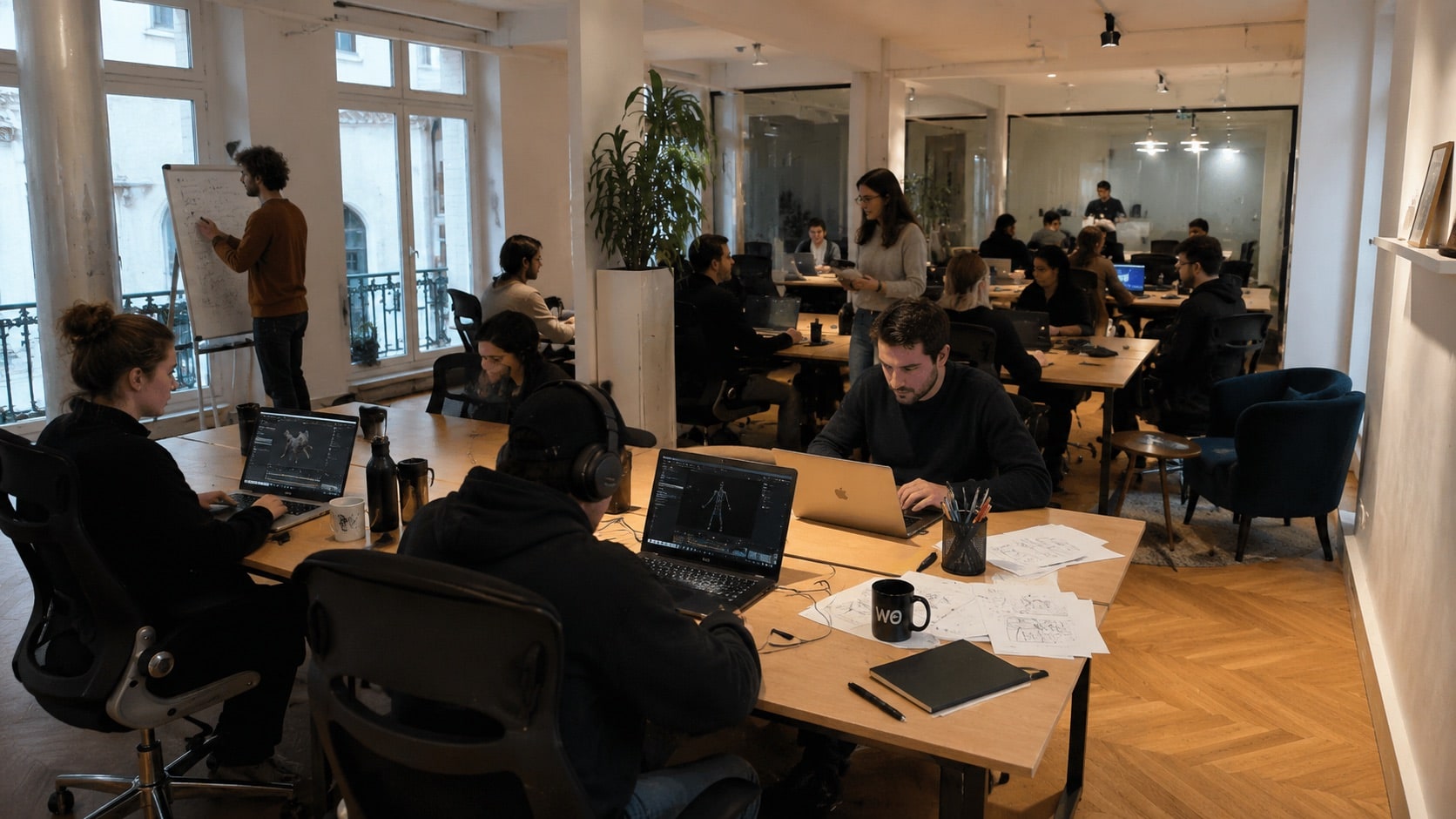
The animation for the series was handled by TNZPV studio in Arles and Annecy, France. “The show has the distinction of working in Blender, the same pipeline as the Oscar-winning feature Flow,” says Dubois. “It’s a fantastic studio that knows the capabilities of this software inside out. “I think there were more than 100 people involved in the production between the preproduction team in Paris and the CG team at TNZPV.”
Mixed-Up Magic
The creative team hopes the show will bring positive images and messages to a world that desperately needs them. “We like to show that our differences can be a real source of strength and inspiration, that diversity is what gives richness to our world, and above all, that friendship truly matters,” says Nguyen.
Dubuis agrees. “What interests me most is how [children] will feel when watching the episodes, the emotions in the moment,” he adds. “Knowing, as Sandrine says, that our differences are our strengths and that they can fit perfectly into a mixed-up group and form a whole.”
Or, as Ross puts it, “We all have magic inside us, we can all be legends, and kindness is the real superpower.”